The problem.
A schema edit may look local but change the behavior of downstream dashboards, datasets, pipelines or ML models. Reviewers need more than the SQL diff: they need the dependency context.
The goal was to make an invisible blast radius understandable before the change is applied.
The engineering approach.
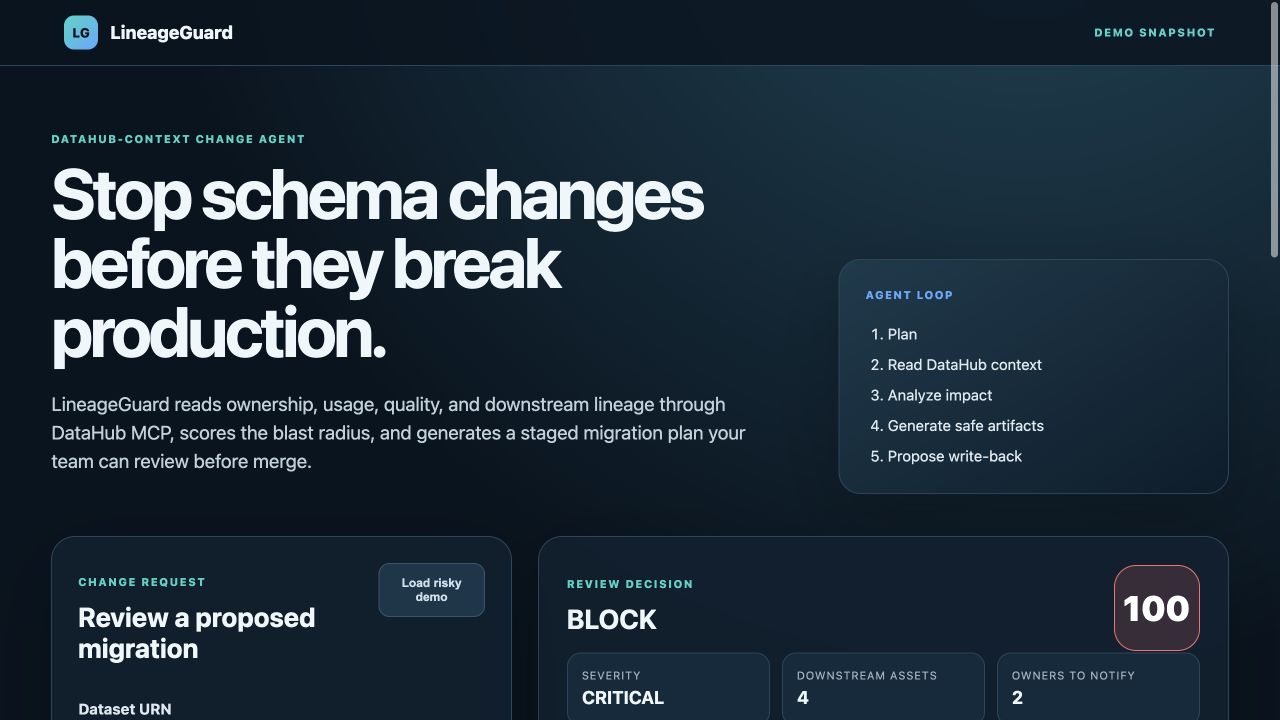
LineageGuard brings lineage, ownership, usage and quality signals from DataHub into a structured schema-change review. It generates an impact assessment, staged migration guidance and review notes.
The workflow returns a block, conditional or proceed decision, with supporting context rather than an unexamined AI assertion.
Implementation and verification.
The public repository contains a DataHub MCP integration, a portable Codex skill, example review artifacts and a runnable demo. Its documented local checks include npm test, npm run mcp:smoke and npm run demo.
The system emphasizes explainable review artifacts and approval-gated write-back instead of immediately changing the metadata store.
Tradeoffs and boundaries.
Metadata quality affects any automated impact analysis. A generated migration still needs its owning team to validate correctness and deployment sequencing.
The hosted demo demonstrates the interface and workflow; it is not a guarantee of compatibility with every organization's live DataHub environment.
This page describes engineering choices documented in the public project repository. Follow the source link for code, runnable instructions, and scope limitations.